Someone told you a metal guide rod is the first upgrade to make on your pistol. A friend, a video, a forum thread. A pistol guide rod upgrade is one of the most common first mods people buy, and one of the most misunderstood. This is the honest version. We machine these parts ourselves in Cheshire, Connecticut, and we wrote it.
We will tell you what a guide rod actually does, then cover when swapping the factory one for steel is a real improvement and when it is just feel and preference. At the end we name the one thing that matters more than the metal it is made from.
After that we point you to the article for your exact platform. The right answer for a slim micro-compact is not the right answer for a full-size duty gun.
What a pistol guide rod upgrade actually changes
The guide rod is the shaft the recoil spring rides on. When you fire, the slide travels back and the spring compresses around the rod, then drives the slide forward to chamber the next round. The rod has one job: it keeps that spring aligned so it compresses straight instead of kinking.
The rod does not absorb recoil and it does not aim the gun. The spring does the work.
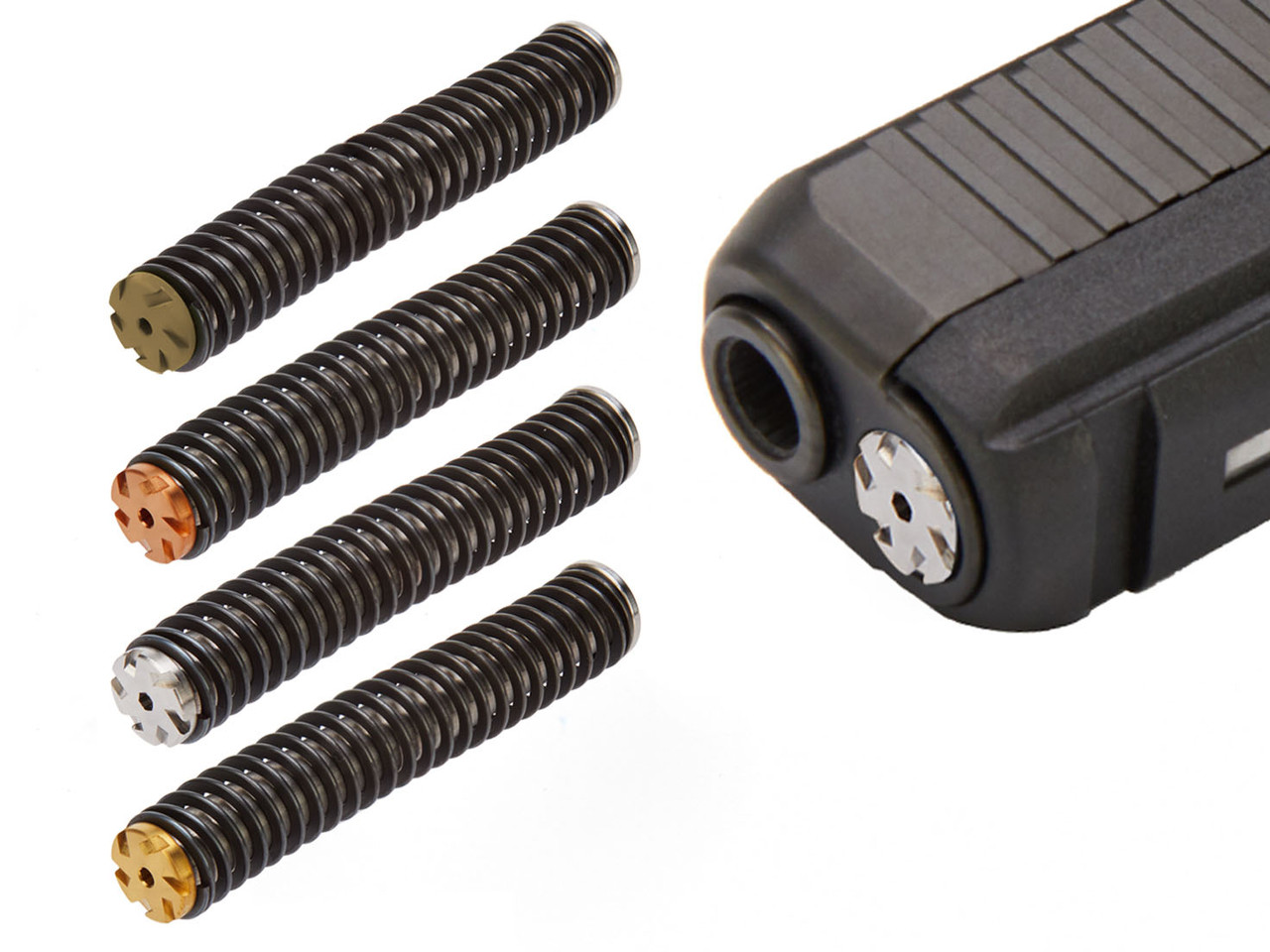
A pistol guide rod upgrade is really about two things: durability and serviceability. Many factory rods are polymer, which can crack or wear over a long life. A solid steel rod will not.
A quality steel rod is usually non-captured, which means you can replace just the recoil spring when it tires instead of throwing away the whole sealed factory unit. The recoil and muzzle benefit people chase is real but small, and it depends heavily on how light your gun is and what you shoot.
The rule that matters more than the metal
The rod material almost never changes how your gun cycles. The recoil spring weight does. Run a spring that is too heavy or too light for your gun and ammo, and problems show up fast: failures to return to battery, weak ejection, or a slide that does not lock back.
That is not the steel’s fault. It is the spring rate. The real advantage of a good guide rod is that it lets you match the spring to your load. Our guide rod assemblies run American-made ISMI springs, made from certified aerospace-specification alloy, in weights from around 11 pounds for light competition loads up to 22 pounds for heavy or red-dot setups. So before any pistol guide rod upgrade, get the spring weight right first.
Factory vs. steel vs. tungsten
Polymer factory rods are light and work fine until they wear. Steel rods add a little weight low and forward, and they do not flex or crack. Tungsten is denser still, so it packs more weight into the same space, which competition shooters chasing the flattest tracking sometimes want.
On a normal-size 9mm the felt difference between materials is subtle. Most shooters are buying durability and the ability to service the spring, not a recoil cure. Anyone selling a guide rod as a recoil reducer with a percentage attached is selling, not explaining.
Always verify exact fitment
A guide rod is a fitted part. It has to match your make, model, generation, and sometimes the variant. A rod cut for one generation can be wrong for the next even under the same model name, so treat “fits most 9mm” or “universal” as a red flag.
Exact fit is the standard. A maker who actually machines the part can tell you the exact models and generations it fits without hedging.
Your pistol guide rod upgrade, by platform
Each pistol guide rod upgrade guide below is written the same way: the real mechanics for that specific gun, where a steel rod genuinely helps it, and where you should save your money.
- Do You Need a Steel Guide Rod for Your Glock 19? (Gen 5, the most common case)
- Do You Need a Steel Guide Rod for Your Glock 17? (full-size, and the Glock 34)
- Steel Guide Rod for a Glock 43X or 48? (slim micro-compacts, where light weight changes the math)
- Steel Guide Rod for a Glock 19 Gen 6? (the newest generation)
- Steel Guide Rods for Older Glocks (Gen 1-4) (the classic non-captured swap)
- Do You Need a Steel Guide Rod for Your Sig P365? (micro-compact carry gun, where light weight changes the math)
- Steel Guide Rod for a Springfield Echelon? (full-size and compact)
- Steel Guide Rod for a Walther PDP? (performance striker pistol)
- Steel Guide Rod for a Smith & Wesson SD9 VE? (budget S&W, SD9 and SD40 VE)
Where to buy, if you do need one
Your platform guide above may land you in the yes column. If it does, our guide rod and tuner kit collection covers Glock, Sig, Smith and Wesson, Springfield, Walther, and more. We machine it in-house with a lifetime warranty. For curated picks, see our best Glock guide rods guide and our stainless steel guide rod buyer’s guide.
If you want the deeper breakdown of what the heavyweight version changes, we wrote up our heavyweight guide rod guide. But if your gun runs fine and nothing is cracked, the most honest pistol guide rod upgrade advice we can give you is simple. Keep your money and go shoot.