
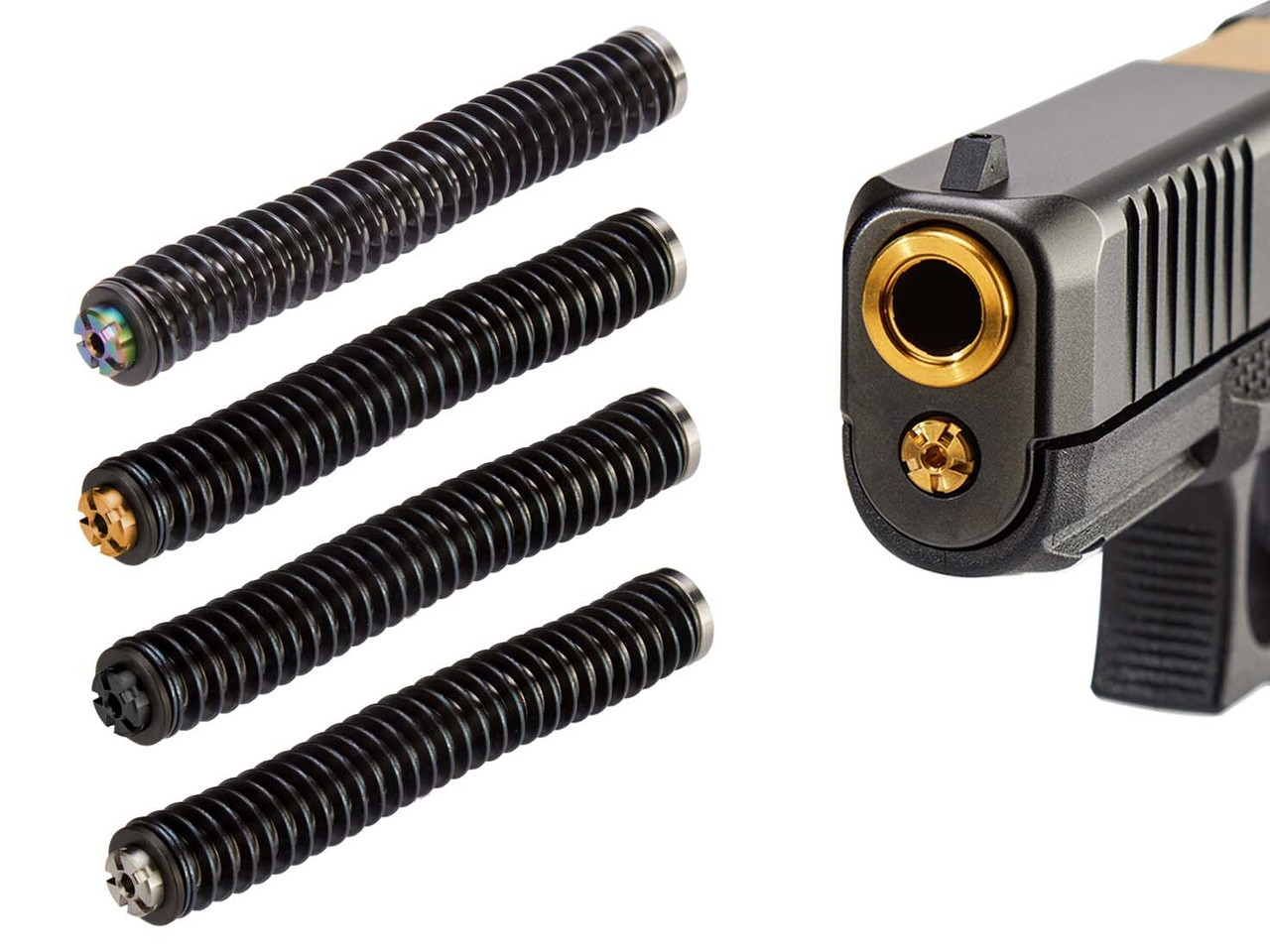
You just picked up a Glock 19 Gen 6, the newest version of the gun, and a friend at the range told you to swap the factory polymer part for a “solid metal” one. He made it sound like a weak point. Now you are at the stage every careful owner reaches, wondering whether a steel Gen 6 guide rod is worth the money.
Is this actually right for your gun, or are you about to fix a problem you do not have? That is the real question.
Good instinct to ask before you buy. We machine our own Gen 6 rods in-house in Cheshire, Connecticut, so we have a clear view of what a steel rod does and what it does not. The honest version beats the hype, especially on a brand-new platform like this one.
A lot of the internet advice still gets copied over from older Glocks, and much of it does not fit the Gen 6 at all. Here is the straight answer for this specific gun.
The short answer on a Gen 6 guide rod
For a Glock 19 Gen 6, a steel guide rod is a durability and serviceability upgrade. It is not a recoil cure. If your factory recoil spring assembly has cracked or worn out, a solid stainless rod is a smart, lasting fix.
If your gun runs fine and you mostly want softer shooting, know this up front: the felt difference on a 9mm this size is subtle, and it comes from the spring weight you choose, not from the rod being metal.
One rule matters more than the material. Match the recoil spring weight to your gun and your ammo, because the spring is what changes how the pistol cycles. A steel rod is worth it when you want a serviceable, lifetime part. It is a waste of money when the factory unit is doing its job.
What a Gen 6 guide rod actually does
The Gen 6 guide rod is the shaft the recoil spring rides on, sitting under the barrel inside the slide. When you fire, the slide travels rearward and compresses the spring, and the spring then pushes the slide back forward to strip and chamber the next round.
The rod keeps that spring straight and aligned through the whole cycle so it compresses evenly instead of kinking or bunching. That is the entire job. The rod guides the spring, nothing more.
By itself it is not a recoil device. It does not tune anything, and it does not change the timing of the action just by existing. What changes the timing is the spring wrapped around it. Keep that in mind, because most upgrade pitches skip right past it.
What “my guide rod failed” usually means
When someone says their guide rod failed, they almost never mean the shaft snapped. On a Glock, the recoil spring assembly is one unit, and what actually wears out is the spring. A spring that has taken thousands of rounds loses tension.
You start to see the slide cycling a little differently. Brass lands in odd places, or the slide occasionally fails to fully return to battery. People feel that change, blame “the guide rod,” and reach for a metal one.
The polymer factory assembly can also crack or deform over a long life, and that is a real failure. The common story, though, is a tired spring inside a fine housing. Knowing which one you have decides whether you need new hardware at all.
How to confirm it before you spend a dime
Field strip the pistol and look at the recoil spring assembly. Check the coils for any that are bent, collapsed, or unevenly spaced, then look at the polymer for cracks, especially near the ends. If you have a fresh factory unit handy, compare the assembled length.
Round count matters too. Glock’s general guidance is to replace recoil springs periodically as a maintenance item, so a high round count alone can explain soft cycling. If the spring looks tired or the round count is up there, a fresh assembly may solve the whole thing. A cracked polymer body is your cue to move to a part built to outlast it.
Factory vs. solid steel vs. tungsten: what actually changes
Weight and where it sits
A factory Glock rod is polymer and light. A solid stainless rod weighs more, and tungsten more again. That weight sits low and forward, under the barrel, near the muzzle. On a compact like the Glock 19 Gen 6 the gun itself is fairly light, so added rod mass is a meaningful fraction of the total. That is exactly why you should be deliberate instead of assuming heavier is automatically better.
What a heavier rod does in the firing cycle
Extra mass low and forward shifts the balance slightly toward the muzzle and adds a small amount of reciprocating weight to the system. Some shooters perceive the gun as settling flatter and feeling a touch more planted. That perception is real for the person feeling it.
It is not a measurable recoil reduction you can count on. On a 9mm of this size, the effect is subtle at best, and we will not put a number on it because there is not an honest one to put.
What it does not do
A steel rod will not tighten your groups. It will not make the pistol more reliable than a healthy factory unit, and on its own it will not change how the gun cycles. The shaft material is not where action timing lives. If a pitch promises tighter groups or a percentage drop in recoil from the rod itself, treat that as marketing, not mechanics.
Captured vs. non-captured
A captured assembly holds the spring permanently on the rod as a sealed unit, which is how the factory part works. A non-captured rod uses a removable tip, so you can take the spring off and put a different one on.
The trade is simple. Captured is drop-in and you never touch the spring. Non-captured lets you change spring weight yourself, and it lets you replace just the spring when it wears instead of buying a whole new assembly. If you ever want to tune, non-captured is the design that makes it possible without buying multiple complete units.
The spring is the variable that matters
Everything that actually changes how the gun cycles comes from the recoil spring weight, not the rod. That includes lockup timing, how hard the slide returns, and how the pistol handles a given load. A lighter spring lets the slide cycle faster and can feel snappier. A heavier spring slows the slide and can soften the impulse, but it may not fully cycle lighter ammo.
The Gen 6 is worth extra care here. Glock moved the 9mm Gen 6 back to a single captive recoil spring design, away from the dual, nested spring used in Gen 5, which gives the Gen 6 a slightly snappier impulse out of the box. This gun runs a bit snappier and does not have the long public tuning history older Glocks do, so picking the wrong spring weight is the fastest way to turn an upgrade into a malfunction.
Does a Glock 19 Gen 6 actually need one?
- Recoil: Be honest with yourself. The felt change on a 9mm this size is subtle, and it comes from the spring, not the metal. Do not buy a steel rod expecting a noticeably softer gun.
- Durability after a failure: Genuine. If your factory assembly is cracked or worn, a solid stainless rod is a permanent fix. It will not crack the way polymer can.
- Serviceability: Genuine, if you choose a non-captured rod with a removable tip. You can swap springs and replace only the spring later instead of the whole unit.
- Feel and preference: Real, but personal. Some shooters like the slightly more planted feel of added mass. That is a valid reason to buy, as long as you know it is preference and not a performance guarantee.
One caution is worth repeating. If you go non-captured and start changing spring weights, do it carefully. A Glock is a balanced system, and the wrong spring weight for your ammo can cause failures to feed, eject, or return to battery.
Say your defensive or carry load runs perfectly on the factory spring. There is a strong argument to keep that exact weight and treat the steel rod purely as a durability upgrade. Tune deliberately, at the range, with the ammo you actually shoot. Do not guess.
Now a word on tungsten. A tungsten rod is denser than stainless, so it packs more mass into the same space. It is the heaviest option people reach for when they specifically want maximum reciprocating weight, but it is still a feel-and-balance choice, with the same honest caveats as any heavier rod. The same hard rule applies: the spring is what changes cycling.
We do not make a tungsten rod for this platform, so we will not point you at one of ours. If that is the route you want, evaluate it on its own merits and pay close attention to fitment for the Gen 6 specifically.
How to verify exact fitment
This is where the Gen 6 trips people up, so slow down here. A guide rod has to match your exact make, model, generation, and sometimes variant. The Gen 6 is not the Gen 5. Glock changed the recoil spring assembly between those generations, so a Gen 5 assembly does not fit a Gen 6.
Watch for vague listings. A part listed for “Glock 19” with no generation is a red flag, and so is one that claims it “fits most 9mm Glocks” or is “universal.” There is no universal Glock guide rod. On a platform this new, a vague listing means the seller has not actually confirmed Gen 6 fitment.
Confirm four things before you buy: the make is Glock, the model is 19, the generation is Gen 6, and the listing names the Gen 6 explicitly. Our Gen 6 guide rod is built specifically for the Gen 6 Glock 19 and 45, and the listing says so. If a fitment list cannot tell you the generation, do not assume. Ask, or move on.
What we build, and why it is made the way it is
We machine our Glock 19 Gen 6 Guide Rod Assembly from stainless steel, built specifically for the Gen 6 Glock 19 and 45. It uses a double Allen wrench tip that comes off easily for maintenance, and that is the part that makes it serviceable. You can take the spring off, change weights, and replace just the spring down the road instead of throwing out the whole assembly.
It ships with ISMI springs, and you choose your weight: 13 lb., 15 lb., 18 lb., 20 lb., or 22 lb. A Tuner Pack is also available if you want every weight to dial in your gun and your load at the range. That spread is the point.
The rod is the durable, lifetime piece. The spring weight is the variable you actually use to tune cycling. A lifetime warranty backs it, we designed it for thousands of rounds, and we machine it here in Cheshire, Connecticut. That is why we are comfortable telling you plainly where it helps and where it does not.
So, should you do this?
- Your factory recoil spring assembly is cracked or worn out: yes, a solid stainless rod is the right, lasting fix.
- You want to swap spring weights and service the spring yourself: yes, get a non-captured rod with a removable tip.
- You like the more planted feel of added muzzle-end mass and know it is a preference: reasonable, so go for it with eyes open.
- You mainly want noticeably less recoil and your gun runs fine: probably not. The felt change is subtle, and your money goes further on practice ammo.
- Your carry load runs flawlessly and nothing is broken: keep your money, or buy the steel rod only as a durability upgrade and keep the factory spring weight.
If you do need one
Say you have decided a steel rod fits your situation. The part to look at is our Glock 19 Gen 6 guide rod assembly, machined in stainless with a removable tip and your choice of ISMI spring weight. Want the broader picture of how guide rods, springs, and recoil tuning fit together across platforms? Our guide rod pillar guide walks through it.
Maybe you are cross-shopping against the previous generation. Our write-up on whether you need a steel guide rod for the Glock 19 Gen 5 covers the differences honestly. And if your gun runs fine, keep your money. A working pistol does not owe you an upgrade.
Frequently asked questions
Will a Glock 19 Gen 5 guide rod fit a Gen 6?
No. Glock changed the recoil spring assembly between Gen 5 and Gen 6, moving the 9mm Gen 6 back to a single captive spring design. The assemblies are not interchangeable. Buy a rod that names the Gen 6 specifically, and do not assume a part listed only for “Glock 19” will fit your Gen 6.
Does a steel guide rod reduce recoil on a Glock 19 Gen 6?
Not in a way you can count on. The rod material does not change recoil by itself, and any felt difference on a 9mm this size is subtle. It comes from the recoil spring weight you choose, not from the rod being metal. If softer felt recoil is your only goal, focus on spring weight and practice, not the shaft.
What recoil spring weight should I run in my Glock 19 Gen 6?
If your gun runs fine on the factory spring, match that behavior and only change weight deliberately. Heavier springs slow the slide and can soften the impulse, but they may not fully cycle light loads. Lighter springs cycle faster and feel snappier. Our assembly offers 13, 15, 18, 20, and 22 lb. ISMI springs plus a Tuner Pack, so you can test weights against your actual ammo at the range. [VERIFY: Glock has not widely published the exact factory recoil spring weight for the Gen 6 G19, so confirm the factory weight before assuming it matches earlier generations.]
Is the NDZ Gen 6 guide rod captured or removable?
Our Gen 6 rod uses a double Allen wrench tip that comes off easily for maintenance. You can take the spring off, change weights, and replace just the spring when it wears, instead of buying a whole new assembly. That serviceability is one of the main reasons to choose a machined steel rod over the sealed factory unit.