
Last updated: March 2026
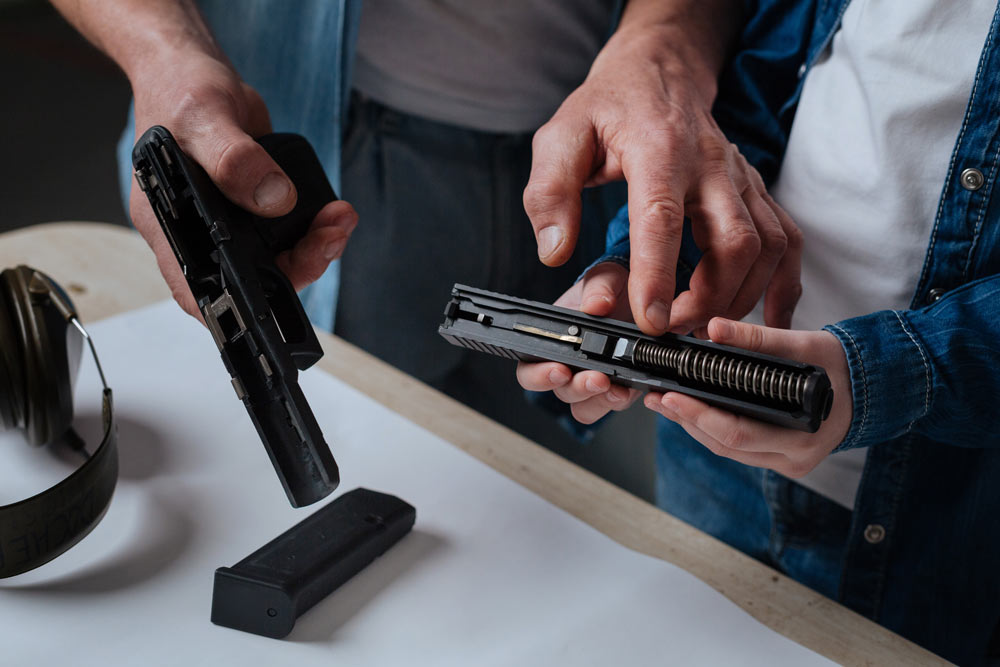
You just installed a new trigger, slide, or sights on your handgun. We get it, the excitement is real. You want to head straight to the range and see what that upgrade does. We’ve been there ourselves. But the difference between shooters who get the most out of their upgrades and those who end up frustrated comes down to what happens after the install. Here are five steps we recommend to every customer who adds new components to their handgun.
Why Should You Test New Handgun Upgrades at the Range Immediately?
Testing new upgrades at the range immediately after installation confirms proper function before you rely on the firearm for carry or competition. A controlled range session reveals fitment issues, cycling problems, or unexpected changes in point of impact that are not apparent from a visual inspection alone. Never carry a modified handgun without live-fire verification.
How Should You Conduct Controlled Testing After an Upgrade?
Start with snap caps to verify the action cycles correctly, then fire a slow string of 10 rounds at a close target to check basic function and point of impact. Gradually increase speed and distance as you confirm reliability. Document any malfunctions including their round count so you can identify patterns and address them before trusting the firearm for defensive use.
Step 1: Test at the Range Right Away
Your first range session after an upgrade is diagnostic, not recreational. A new trigger, slide, or sights can change how your gun feels and behaves. Your job on this first range trip is to identify those changes before they show up at the worst possible time.
A familiar range setting gives you the safety and focus to evaluate changes in recoil, balance, and accuracy without distractions. You want to catch any issues here, not during a competition or a defensive situation.
What Problems Can Appear After Installing a New Handgun Part?
Common post-upgrade problems include failure to feed, failure to eject, shifted point of impact, and changes in trigger reset feel. Some parts require a break-in period of 50 to 100 rounds before they function reliably. Identifying these issues early at the range prevents dangerous malfunctions in a defensive situation where your life may depend on the firearm cycling correctly.
We had a customer upgrade to a new slide with improved recoil management, then went straight to a USPSA match without range testing first. His recoil pattern had changed just enough to throw off his split times. A single diagnostic session beforehand would have caught that. Don’t skip this step.
Do You Need to Re-Zero Your Sights After a Handgun Upgrade?
Yes, many handgun upgrades change the point of impact and require sight adjustment. A new barrel, guide rod, or trigger can shift where your rounds land by altering the recoil impulse, lock-up, or the way you press the trigger. Shoot a group from a rest at a known distance, then adjust windage and elevation until the group centers on your point of aim.
Why Do Upgrades Change Your Sight Alignment?
Upgrades change sight alignment because they alter the mechanical dynamics of the firearm. A heavier guide rod changes the recoil impulse and muzzle dip, shifting point of impact vertically. A new barrel may have slightly different lock-up geometry. Even a trigger upgrade changes how you interact with the firearm, producing a different natural point of aim.
Any upgrade that touches the slide or barrel can shift your sight alignment. Even small differences in slide height, barrel crown, or optic mounting position will move your point of impact. Never assume your sights are still zeroed after an upgrade.
How Do Sight Adjustments Affect Shot Precision After Upgrades?
Proper sight adjustment after an upgrade ensures your mechanical accuracy matches your aiming point. Without re-zeroing, you may unconsciously compensate by holding off target, which introduces inconsistency and defeats the purpose of the upgrade. A properly zeroed firearm lets you trust your sights and focus on fundamentals rather than guessing where rounds will land.
One of our customers installed a new slide and spent an entire range day questioning his technique because his groups kept drifting left. His fundamentals were solid. The problem was that the new slide sat slightly different in the frame, shifting the sight picture by just enough to matter. Five minutes of sight adjustment fixed it completely.
What Sight Options Does NDZ Performance Offer for Handguns?
NDZ Performance offers fiber optic sights, tritium night sights, and suppressor-height sights for Glock, Sig Sauer, and other popular platforms. Each option provides faster target acquisition and more precise aiming than factory sights. Fiber optics excel in daylight, tritium glows in darkness without batteries, and suppressor-height sights co-witness with red dot optics.
When you upgrade to NDZ Performance components, we include setup guidance for sight adjustment. Take the time to confirm your zero at 10 and 25 yards after any slide or barrel work.
How Do You Adapt to a New Trigger After Upgrading?
Spend dedicated dry fire sessions with your new trigger before live fire to learn its wall, break point, and reset distance. A lighter or shorter trigger changes your timing and can initially cause unintended discharges if you are not deliberate. Build a new trigger press cadence through repetition until the new feel becomes automatic and predictable under stress.
What Changes Should You Expect from an Aftermarket Trigger?
Aftermarket triggers typically have a shorter take-up, crisper wall, lighter break, and shorter reset compared to factory triggers. These changes improve precision but require adjustment to your existing muscle memory. Expect your first few sessions to feel different as your brain recalibrates timing. Most shooters fully adapt within 200 to 300 rounds of focused practice.
A new trigger changes the game in ways that take time to absorb: different break point, different reset, different wall. Even an upgrade that’s objectively better than your factory trigger requires a learning period before it becomes an asset.
Start with dry fire practice. Focus on feeling the new break point and reset. Pay attention to trigger weight, travel distance, and where the wall is. These details shape your trigger control, and getting them wrong early builds bad habits that are hard to undo.
What Results Do Shooters Report After Trigger Upgrades?
Shooters consistently report tighter groups, faster splits, and increased confidence after installing aftermarket triggers. The reduced trigger pull weight and cleaner break eliminate the tendency to anticipate and flinch. NDZ Performance customers frequently note measurable improvement in both accuracy and speed within their first two range sessions after upgrading their Glock or Sig triggers.
One of our customers switched to a lighter aftermarket trigger and initially found himself over-pressing, which affected both accuracy and shot cadence. Focused dry fire practice over two weeks recalibrated his muscle memory and his groups tightened noticeably. The trigger didn’t change — his adaptation to it did.
How Should You Clean and Inspect Your Handgun After Upgrading?
After your first 100 rounds with a new upgrade, field-strip the firearm and inspect the new part for unusual wear patterns, burrs, or debris. Check that all pins and retaining components are secure. Clean carbon buildup from the barrel, slide rails, and around the new component. Early inspection catches fitment issues before they cause a malfunction during critical use.
What Maintenance Does a Newly Upgraded Handgun Need?
A newly upgraded handgun needs lubrication on all contact surfaces of the new part, a full field-strip inspection after the first 50 rounds, and another check at 200 rounds. New metal parts develop initial wear patterns that stabilize after break-in. Monitoring this process ensures the part seats properly and the firearm achieves reliable cycling before you trust it for carry.
New parts need a break-in period. Fresh slides, barrels, and internal components can carry machining residue and may seat differently than worn parts. A thorough cleaning after your first range session removes break-in debris and gives you a clear look at how the new components are wearing.
What Wear Signs Indicate a Problem with a New Handgun Part?
Look for uneven wear marks, metal shavings, peening on contact surfaces, and any looseness in the part. Discoloration or galling on slide rails or barrel lugs indicates excessive friction that needs attention. If the part shows wear in unexpected locations, it may be out of spec or incorrectly installed. Address these signs immediately rather than continuing to shoot.
- Fit of new components, especially at tight-tolerance interfaces
- Signs of unusual wear or metal-on-metal contact
- Proper lubrication on all moving surfaces
- Function of the extractor, ejector, and firing pin after the first live fire session
Run a full function check after reassembly: trigger reset, slide operation, magazine insertion and release. Confirm everything works together before your next range session.
How Much Training Do You Need After Installing Handgun Upgrades?
Plan for 200 to 500 rounds of focused practice before a new upgrade feels natural. The goal is reaching unconscious competence where you no longer think about the new part during shooting. Structure your training with specific drills targeting the skill the upgrade supports, whether that is faster splits from a new trigger or better recoil management from a guide rod.
How Do You Progress from Familiarity to Mastery with New Parts?
Progress from familiarity to mastery by setting measurable benchmarks at each stage. Start with slow-fire accuracy to confirm zero, then add speed, movement, and stress. Track your split times and group sizes across sessions to verify objective improvement. Mastery means your performance with the upgraded firearm consistently exceeds your baseline with factory components.
The goal of training with your upgraded handgun is to reach the point where the modifications feel invisible. They should enhance your performance without demanding your attention. That only happens through deliberate repetition.
Casual range time isn’t enough. You need structured drills that specifically exercise the upgraded components. If you installed a new magwell, run reload drills. New trigger? Run accuracy and cadence drills. New slide? Work on recoil management and transitions. Our shooting range training guide covers how to build a structured practice plan around your specific goals.
What Is the Best Training Schedule After Upgrading Your Handgun?
Dedicate your first session entirely to zero confirmation and slow-fire groups. The second session adds speed drills and timed standards. The third session introduces draws, reloads, and movement. By the fourth session, run your normal practice routine and compare results to your pre-upgrade baseline. This phased approach builds confidence while verifying reliability at each step. Our complete guide to shooting range training lays out how to structure those sessions week by week.
A customer who added an extended magwell to his Glock 19 found that his reloads were actually slower at first because the magazine insertion angle had changed slightly. Eight weeks of deliberate reload practice brought his times down below where they were before the upgrade. The magwell worked — he just had to train with it.
Build your post-upgrade training around:
- Dry fire practice to lock in new muscle memory patterns
- Live fire drills that specifically test your new components
- Scenario-based training to validate performance under pressure
- Timed drills to track measurable improvement over weeks
Conclusion
Installing aftermarket parts is the easy part. Getting the most out of them takes work: range testing, sight adjustment, trigger familiarization, cleaning and inspection, and committed training. Each step reinforces the others.
You’ve put real money and thought into upgrading your handgun. Now invest the range time to make those upgrades work for you. Every step you take post-upgrade directly affects how reliable, accurate, and confident you feel with your firearm.
Whether you’re a competitive shooter, carry for self-defense, or just enjoy putting tight groups on paper, these practices help you get the most from your investment. For more on building fundamental skills, check out our guide: Improve Shooting Accuracy with these 5 skills.
After installing a new handgun upgrade, start with dry-fire function checks to verify proper reset and cycling. Then fire 50-100 rounds at the range, starting slow and increasing pace. Monitor for any unusual wear patterns, failures to feed, or extraction issues and address them before trusting the upgrade for carry.
Yes, any change to the barrel or slide can affect point of impact. After installing a new barrel or slide, fire a 5-shot group at 15-25 yards to verify zero. Adjust sights as needed before relying on the new configuration for defensive use or competition.
Test the trigger for consistent pull weight and reset using a trigger pull gauge. Perform drop tests following safe procedures to verify the trigger does not fire from impact. Carry only after confirming consistent function through a minimum of 200 rounds of your defensive ammunition.
- Test at the Range Right Away
After installing any upgrade, go to the range immediately. Shoot at least 50 rounds to verify reliable function and establish a new baseline for accuracy.
- Adjust Your Sights After Upgrades
Any modification touching the slide or barrel can shift point of impact. Re-zero your sights or red dot after installing optics, a new barrel, or slide work.
- Familiarize Yourself with New Trigger Characteristics
A trigger upgrade changes break point, reset distance, and wall feel. Spend deliberate dry fire sessions learning the new characteristics before live fire.
- Clean and Inspect for Wear
New aftermarket parts carry machining residue and need break-in. Disassemble, clean thoroughly, and inspect for abnormal wear after the first 200 rounds.
- Train Until the Upgrades Disappear
The goal is for upgrades to feel invisible under stress. Practice until the improved trigger, sights, and ergonomics become instinctive rather than conscious.